HighIV Macro Policy & Sovereign Debt17 September 2026, Thursday
Putin: the 2027 budget deficit will be about 2% of GDP on an assumption of 50 dollars a barrel, with 2026 growth at most 1%
At an economic meeting on 17 September, Putin said the 2027 federal budget deficit would be about 2% of GDP, that this rested on a conservative oil assumption of about 50 dollars a barrel, and that growth in 2026 would be at most 1%.
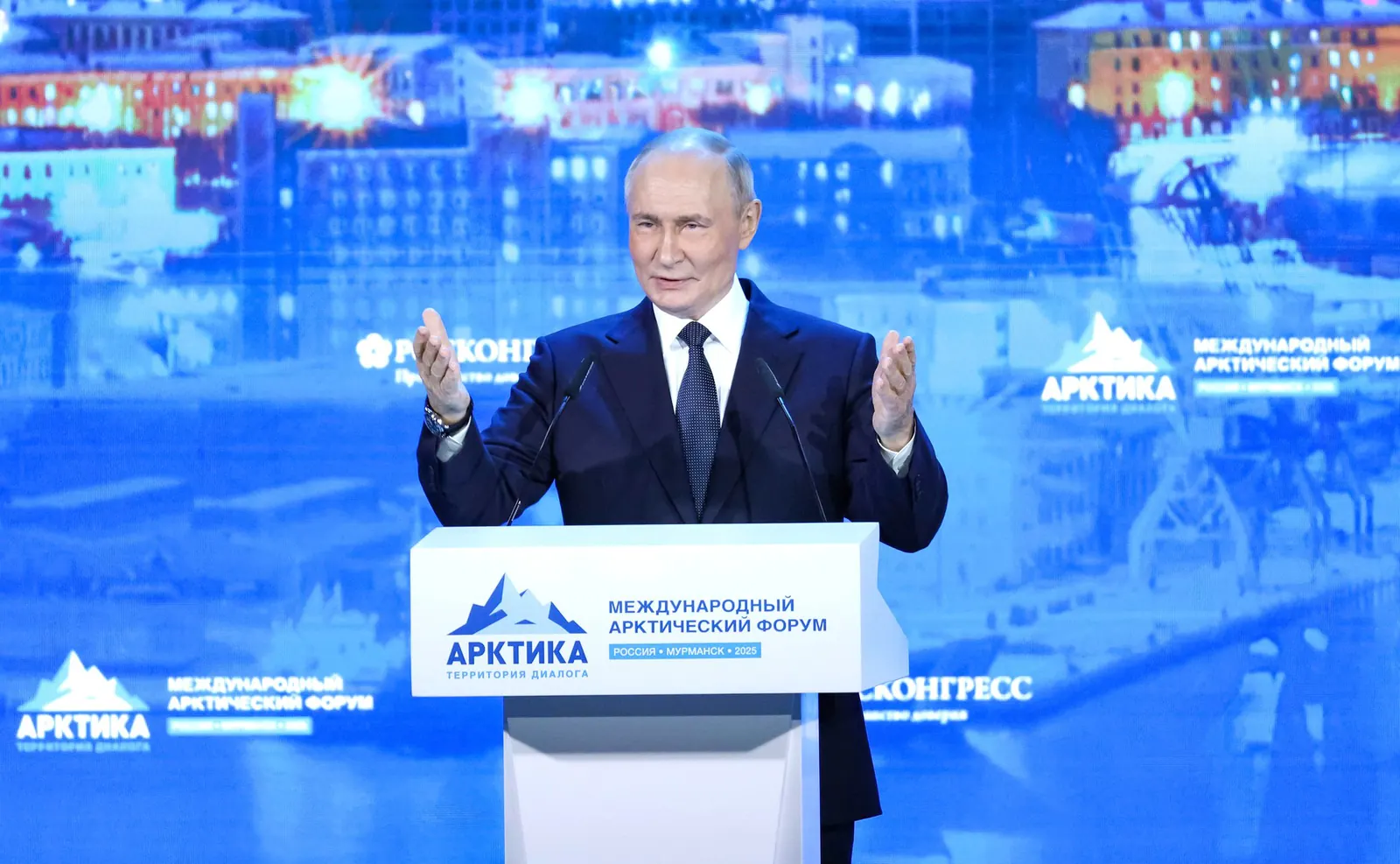
According to a report sourced to Reuters, Russian President Vladimir Putin said at an economic meeting on 17 September 2026 that the 2027 federal budget deficit was projected at around 2% of gross domestic product. Putin said this figure rested on a very conservative oil price assumption of about 50 dollars a barrel. At the same meeting he said the Russian economy was expected to grow at most 1% in 2026.
Putin also said that oil prices had risen in global markets, that this would increase oil and gas revenues in the coming months and would allow the government to replenish the National Wealth Fund. The fund serves as the shock-absorbing cushion of the Russian budget. The meeting was reported to have listed the priorities of the 2027 budget as social obligations, the security of citizens and the strengthening of defence capability.
No detail was given beyond the figures announced: the reports contained no new number either for the key interest rate or for detailed revenue and expenditure lines. Apart from the Kremlin's own statement, this record contains no independent confirmation of a formal presentation of the budget text; the figures here rest on Putin's verbal statement.
Talay assessment
Bottom line
An assumption of 50 dollars a barrel shows that Moscow has written a budget that builds a cushion against downside risk rather than seeking an upside surprise in oil revenue. Read together with an expectation of growth of at most 1%, the picture points to a framework in which war spending is sustained while the civilian economy stagnates. The most likely direction is for the deficit to stay under pressure to exceed the announced 2% target.
Likely effects
- Russian public financesNegative1–6 months
A low assumed oil price makes the target easier to meet, but if the actual price falls, the need for withdrawals from the National Wealth Fund and for borrowing rises rapidly.
- Russian domestic demandNegative1–6 months
An expectation of growth of at most 1% in 2026 means accepting a year in which investment and employment contract in non-defence sectors.
- Trade with TürkiyeNegative6 months+
Weakening Russian domestic demand produces pressure on the demand side for Turkish exporters of food, textiles and machinery selling to Russia.
Possibilities, ranked
- 1The deficit overshoots the target50%
Oil and gas revenues fall below expectations, the deficit exceeds 2% of GDP and use of the fund increases.
Watch: The deficit exceeding the annual target in the Finance Ministry's monthly federal budget execution data.
- 2The target is met35%
The rise in oil prices continues, revenues come in above the assumption and the deficit stays around 2%.
Watch: Official data showing oil and gas revenues turning to annual growth on a monthly basis.
- 3A new tax package15%
Additional tax increases come onto the agenda during budget negotiations in order to close the deficit.
Watch: A provision changing tax rates in the budget text submitted to the Duma.
Probabilities are calibrated judgement based on the sources, not measurement, and are revised as new information arrives. Not investment advice.
Market reaction
Indicators affected
- Russian fiscal space▼ narrowing
- National Wealth Fund▲ replenishment
- Brent▲ budget: $50/barrel
Historical context
Brent crude oil, last 6 months
- 109/09 · US and Iran strike tankers in the largest wave of attacks on shipping since the war began
- 211/09 · Drones launched from Iraq strike Saudi Arabia's East-West pipeline, which has been shut down
- 314/09 · Ship-tracking data at Hormuz contradict the US Energy Secretary's claim of 10 million barrels a day in flows