VI Energy Politics & Supply Security·Analysis·Middle East and North Africa
The roll did not ease anything; scarcity moved into January Brent
December Brent expired at $117.64 on 30 October and the headline fell to $113.43. That $4.21 decline is a change of contract, not a loosening. The January–February spread held at $3.87, above our $3 threshold; scarcity has simply moved to the new front month.
Energy & Shipping Desk · 31 October 2026 · 8 min read · 17 sources
Talay Insight Analysis DeskAI-assisted analysis, reviewed by an editorPublisher of record: Lu Apps LLCTrack recordRequest a correction
Why it matters
Noise: Brent falling from $117.64 to $113.43, and Trump saying the war will end soon. Signal: between 27 and 30 October the January contract rose $4.02 while December 2027 rose only $0.95, and December 2029 and beyond fell on 30 October. The market is not treating the war as permanent, but it is pricing the next 6 to 12 months of barrels as very scarce. That price is set not by OPEC+ quotas but by how many barrels actually leave the Strait of Hormuz.
Implications
- January Brent settled at $113.43 on 30 October; the January–February spread was $3.87, the gap between January and December 2027 was $25.32, and the difference against end-2036 was $52.41.
- According to Kpler, Hormuz flows averaged 11.1 million barrels a day in October but fell to 7.3 million in the week ending 28 October, more than 40% below the pre-war level.
- CNBC reports that roughly 20% of the world's supertanker fleet is tied to the Gulf shuttle system, and that shipping costs out of the Gulf have risen to $21 a barrel from $6.50 in September.
Noise
Brent fell from $117.64 to $113.43, so the risk premium is melting
Signal
At $3.87 the January–February spread moved scarcity into the new front month
The noise is in the headline, the signal in the spread
The headline of 30 October placed two numbers side by side. On its final day the December contract rose $2.76 to expire at $117.64, while the January contract rose $2.63 to settle at $113.43. Once the continuous series rolled to January the price appeared to fall $4.21, yet both contracts rose during the day. Our report of 29 October flagged this false break in advance and set a $3 threshold for the January–February spread. On Oilprice's 30 October quotes, January stood at $113.43 and February at $109.56, a spread of $3.87. The threshold held: the scarcity was not an expiry squeeze, it moved to the front month.
The turning point of the curve says more. On 27 October closes, January stood at $109.41, June 2027 at $95.77 and December 2027 at $87.16. By 30 October those contracts were $113.43, $98.22 and $88.11: the front month gained $4.02 and the far end $0.95. December 2028 fell $0.08 the same day and December 2029 fell $0.21. The market is writing the rising risk into the period up to end-2027 and making 2029 cheaper. Saxo's post-war forecast of $70 to $90 fits the same shape.
1 · Geopolitical supply and logistical constraints
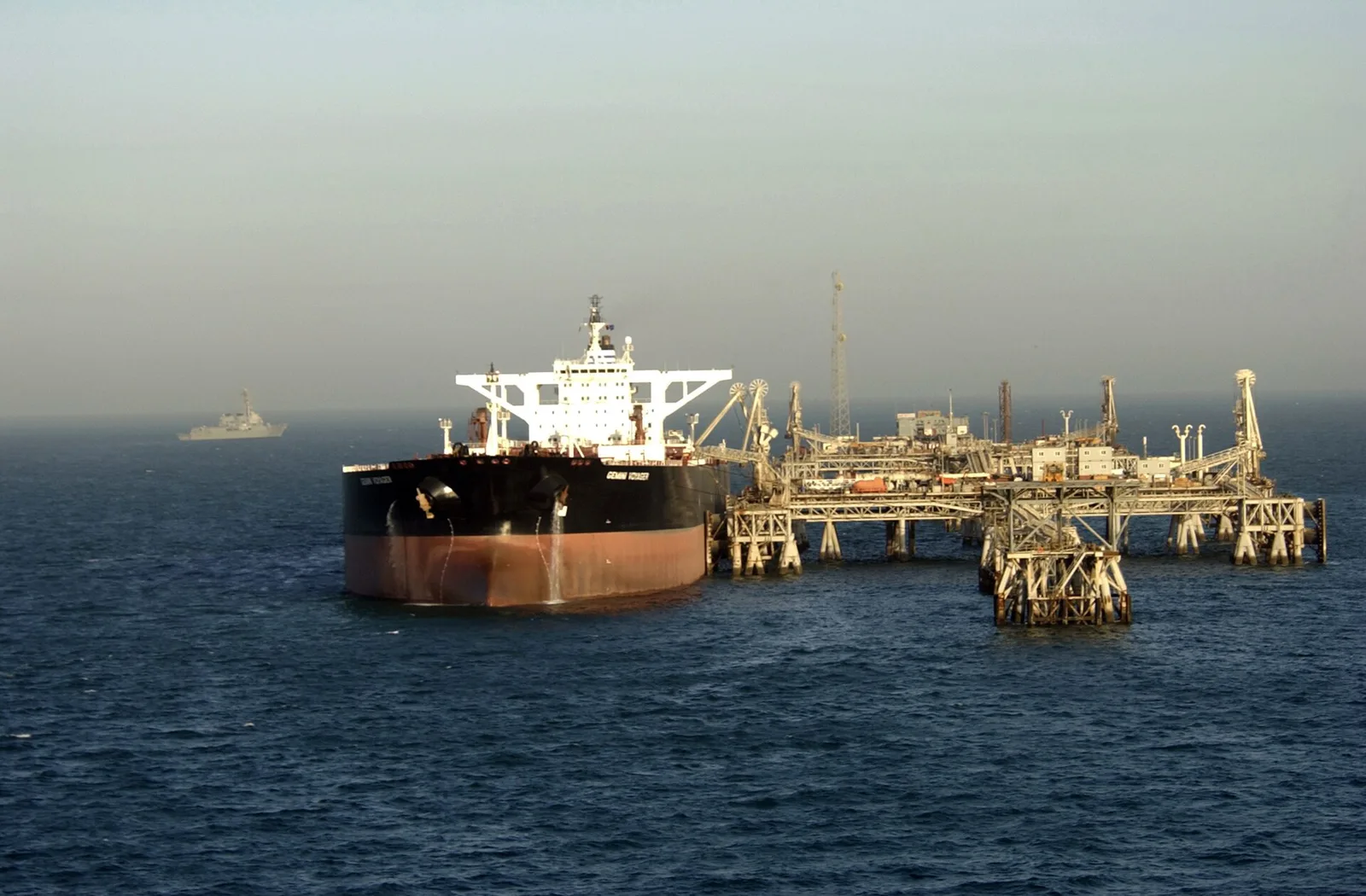
The constraint is not whether the strait is open or closed, but how many vessels make the passage and on whose balance sheet. That is why the numbers do not agree. IMF PortWatch shows 2 transits for 25 October. Windward counted 13 transits on 29 October, 4 of them with AIS switched off. The Strait of Hormuz Ship Monitor recorded 45 transits and 1.40 million barrels through the strait in the 24 hours to 10:31 UTC on 31 October. UKMTO put traffic on 30 October at roughly 70% below pre-war levels. Kpler gave an October average of 11.1 million barrels a day and a final week of 7.3 million. Most of these figures measure a different window by a different method.
The cost of the flow shows up in freight and insurance. According to CNBC, supertanker hire from the Gulf of Oman to Asia rose from $249,000 a day at the start of September to above $900,000 in the first week of October; shipping costs went from $6.50 to $21 a barrel. On 25 September Reuters put the Hormuz war premium at 6 to 9%, with 7-day cover reviewed every 24 hours. A secondary compilation dated 31 October reports 3 to 8%; we could not verify the original in Insurance Business. The threshold is this: if the first successful limpet attack on 29 October pushes the premium above 10%, the last vessels outside national fleets also drop out of the calculation.
2 · Supply security and critical thresholds
OPEC+ will not add new barrels to this equation on 1 November. Three sources who spoke to Reuters on 27 October expect the 7 core members to hold their December targets; no decision has yet been taken. The quota is not the binding constraint, because most members produce below target. According to Bloomberg, Saudi output rose by a third in September to exceed 8 million barrels a day; the Reuters survey put the OPEC total at 21.49 million. Estimates of Saudi exports for October range from 5.4 to 6.99 million barrels a day depending on the tracker. Kpler recorded a 29% fall in loadings at Ras Tanura.
The buffer is thinning on the products side. On 15 October the IEA decided to accelerate 100 million barrels and will release more than 20 million barrels of diesel; the March commitment was 400 million, of which 330 million has gone out. IEA data put Middle East product shipments at 1.9 million barrels a day in September against 4.7 million before the war. Observed stocks at the end of September were 509 million barrels below pre-war levels. The EIA put US distillate stocks at 102.8 million barrels on 23 October; New York Harbour diesel stood at $4.687 a gallon on 27 October, against a 2026 peak of $5.365 on 16 September. The line at which the reserve runs out is the hardest threshold in this pillar.
3 · Second-round effects
The same Gulf constraint extends to gas. TTF passed 100 euros on 30 October, and EU storage stood at 74.89% on 29 October, roughly 11 points below the five-year average. Oil found a way out of the Gulf; Qatari LNG did not. While the shuttle system preserves crude flows, it ties up 20% of the supertanker fleet, which pulls freight higher on other routes. In countries that import products and gas, the cost passes first to industry, then to inflation and the current account. For Türkiye, the $4.21 fall in the headline therefore does not reduce the bill.
4 · The falsifier
This reading fails if the January–February spread drops below $1 and Kpler's weekly flow returns above 11 million barrels a day. In that case the 7.3 million figure should be treated as a temporary deviation and the front-month premium as headline fear. A positive Iranian answer to Qatar over the weekend would break the chain at its first link. Front-month Brent passing the war's highest close of $118.35 would instead bring H2 forward. Following the 29 October report we raised H2 from 30 to 35 and cut H3 from 20 to 15, on the basis of October's record number of attacks and the limpet technique.
Probabilities
Scenarios
| Scenario | Probability | Trigger | Market impact |
|---|---|---|---|
| H1Scarcity stays in the front month | 50% | Iran gives a partial answer, the decision slips past 3 November and OPEC+ holds its targets on 1 November. | Flows stay in a band of 7 to 11 million barrels a day, with diesel and freight remaining tight. |
| H2Strike and Gulf retaliation | 35% | A US strike begins after 3 November, or limpet and Houthi attacks produce confirmed damage at a facility. | The shuttle system slows, product supply tightens and war cover presses the 10% threshold. |
| H3The Qatari formula erases the premium | 15% | A formula is found on the sequencing of the blockade and the nuclear file, and an opening timetable for Hormuz is discussed. | The prompt delivery premium recedes and the front of the curve flattens. |
Module A
Constraints Matrix
STRUCTURAL AVG 4.3 · TACTICAL AVG 2.7Structural constraints dominate: the outcome is set more by these limits than by the actors' preferences.
Hard structural constraintspersistent · beyond the actors' will
Actual Hormuz flow · Iran
5/5Kpler puts the October average at 11.1 million barrels a day and the final week at 7.3 million, more than 40% below the pre-war Hormuz baseline.
Capacity tied up in the shuttle fleet · Saudi Arabia
4/5CNBC reports that roughly 20% of the supertanker fleet is tied to the Gulf shuttle system, at a shipping cost of $21 a barrel.
The product buffer
4/5The IEA puts observed stocks at the end of September 509 million barrels below pre-war levels; Middle East product shipments fell from 4.7 to 1.9 million barrels.
The timing of the strike decision · United States
4/5The US midterms fall on 3 November; no firm date for a strike could be verified, and the Qatari answer is expected at the weekend.
Tactical frictiontemporary · eases over time
War premium uncertainty days
3/5Reuters gave 6 to 9% on 25 September; a secondary compilation dated 31 October reports 3 to 8%. Current broker quotes could not be verified.
Counting differences weeks
3/5Estimates of Saudi exports range from 5.4 to 6.99 million barrels a day; Hormuz transits vary between 13 and 45 depending on the source.
The OPEC+ quota decision days
2/5December targets are expected to hold on 1 November; the additional 2 million barrel cut runs to year-end, and the capacity audit has been delayed.
Module B
Signal vs Noise
SIGNAL 50% · NOISE 50%
- NOISE
Brent fell from $117.64 to $113.43, so the risk premium is melting
The fall comes from the change of contract: on 30 October December rose $2.76 and January $2.63. The $4.21 gap between them is not a market move.
Data: Brent crude oil (futures) ›FinanceFeeds — Brent Crude Oil Price at $113.43: OPEC+ Meets Sunday
- SIGNAL
At $3.87 the January–February spread moved scarcity into the new front month
On 30 October quotes January stood at $113.43 and February at $109.56. Since 27 October January has risen $4.02 and December 2027 only $0.95.
Data: Brent crude oil (futures) ›Oilprice.com — Brent Crude Oil Futures Contracts (30 October 2026 quotes)
- NOISE
Trump said the war will end soon, so supply is returning to normal
On 30 October Trump did not say how it would end; Iran's 7 conditions stand and UKMTO counted more than 30 attacks in October.
CBS News — Iran War Updates: Trump says war going to end soon as Qatar pushes for a U.S.-Iran deal
- SIGNAL
Hormuz flows fell to 7.3 million barrels a day in the final week
Kpler put the October average at 11.1 million barrels against 7.3 million in the week ending 28 October, more than 40% below the pre-war baseline.
Data: Strait of Hormuz transits ›CNBC — Tankers defy sharp escalation of Iranian attacks to keep crude oil flowing through Strait of Hormuz
- NOISE
Sunday's OPEC+ decision will determine supply
Three sources say the targets will not change and most members produce below quota; the decision does not change physical barrels.
Oil & Gas 360 — OPEC+ expected to hold December oil targets steady as supply disruptions persist
- SIGNAL
The limpet technique moved the threat from the route to the hull
According to Reuters sources, a small boat placed 2 limpet mines on the Louise 1 on 29 October; CENTCOM says the lanes have been cleared of mines.
Data: Strait of Hormuz transits ›gCaptain (Reuters) — Tanker in Strait of Hormuz Hit by Limpet Mines, Security Sources Say
Module C
Asset-Class and Positioning Implications
| Asset class | Exposure | Transmission channel | H1 | H2 | H3 | Expected | Conviction | Horizon | What to watch |
|---|---|---|---|---|---|---|---|---|---|
| Commodities | The Brent front-month spread | Falling actual flows and the product buffer keep the front month expensive against deferred contracts | + | ++ | −− | +0.90 | ●●● | 0–3 months | The January–February spread and the one dollar threshold |
| Commodities | Middle distillates and European gas | The drop in product shipments and the storage deficit feed from the same Gulf constraint | + | ++ | − | +1.05 | ●●● | 0–3 months | EIA distillate stocks and EU gas storage levels |
| Freight & insurance | Tanker freight out of the Gulf and the war premium | The supertanker fleet staying tied up and attacks aimed at hulls keep voyage costs elevated | + | ++ | −− | +0.90 | ●●● | 0–3 months | The single-transit Hormuz quote and the 10% threshold |
| Volatility | Oil option volatility | The decision after 3 November and the Qatari answer amplify price jumps | 0 | ++ | − | +0.55 | ●●● | 0–3 months | White House statements and Brent implied volatility |
Second-order effects
And then what?
Starting point
On 30 October the January–February Brent spread held at $3.87 and the January contract had risen $4.02 since 27 October; Kpler's weekly Hormuz flow fell to 7.3 million barrels a day.
- 1
Inventories and strategic reserveswithin weeks
While the premium for prompt delivery persists, buyers draw on inventory and the 100 million barrels the IEA has accelerated act as a melting buffer rather than new supply.
Watch: EIA weekly distillate stocks and the IEA November oil report
- 2
Freight and refining marginswithin weeks
As the buffer thins, product spreads widen, and because 20% of the supertanker fleet stays tied to the Gulf, freight does not fall either: the $21 a barrel shipping burden persists.
Watch: Gulf–Asia shipping costs and New York Harbour diesel spot prices
- 3
Current accountwithin months
In countries importing products and gas the cost passes into inflation and the current account; in Türkiye the diesel and gas bill widens despite the fall in headline Brent.
Watch: Türkiye's monthly energy imports and EPDK diesel prices
What breaks the chain
The chain breaks at the first link if Kpler's weekly flow returns above 11 million barrels a day, the January–February spread falls below one dollar, or Iran responds positively to the Qatari draft.
Triggers
Thresholds to watch
| Indicator | Threshold | Today | What it means |
|---|---|---|---|
| Brent crude oil (futures) | Front month > $118.35 | — | If March's highest wartime close is exceeded, the market is pricing deepening scarcity in the January contract too |
| Brent crude oil (futures) | January–February < $1 | — | If the spread falls below one dollar, the front-month scarcity reading fails |
| Strait of Hormuz transits | Kpler < 7 mn bbl/day | — | If the weekly flow falls below even 7.3 million barrels, the shuttle system has reached its capacity limit |
Sources
- Oilprice.com — Brent Crude Oil Futures Contracts (30 October 2026 quotes)
- CNBC (Reuters) — Oil jumps 2%, settles at 6-month highs on fears of escalation in Iran
- CNBC — Tankers defy sharp escalation of Iranian attacks to keep crude oil flowing through Strait of Hormuz
- FinanceFeeds — Brent Crude Oil Price at $113.43: OPEC+ Meets Sunday
- Commodity Board — Oil curve turns steep backwardation as geopolitics inflate risk premium
- Straits — Strait of Hormuz News, October 31, 2026
- Windward — Strait of Hormuz Daily Intelligence (30 October 2026)
- Strait of Hormuz Ship Monitor — daily count, 31 October 2026
- Al Jazeera — Oman rescues 25 from burning oil tanker in Strait of Hormuz
- Gulf News — Saudi oil keeps flowing despite attacks, say trackers: Why counting barrels is not easy
- gCaptain (Bloomberg) — Middle East Oil Flows Near Prewar Levels Defy Hormuz Attacks
- Oil & Gas 360 — OPEC+ expected to hold December oil targets steady as supply disruptions persist
- Insurance Journal (Reuters) — War risk premiums for Saudi-linked tankers at Yanbu and Hormuz (25 September 2026)
- gCaptain — IEA Moves to Accelerate Oil Reserve Releases as Hormuz Crisis Drags On
- Energy News Beat — Houthis Claim Hits on Three Saudi Oil Sites, and Diesel Pays First
- CNBC — A cold winter risks another gas price shock in Europe as stocks dwindle to record lows
- Oilprice.com — European Gas Tops 101 Euros for First Time Since 2022
Sourcing and verification rules: methodology · Report an error: contact
Related reports
VIEnergy & Supply·In-depth analysis·Eurasia
Ukraine targets the overflow valve as pipelines cap Russian exports
Refinery losses run at 1.5–2.2 million barrels a day, and the ports have absorbed only part of that. The Kaleykino strike puts the pumping network that carries the surplus to port in the crosshairs.
Energy & Shipping Desk · 20 November 2026 · 11 min
VIEnergy & Supply·Analysis·Eurasia
Refinery strikes push Russian crude to port, leaving Türkiye short of diesel
Russia shipped 4.32 million barrels a day of crude in the week to 15 November. Its November diesel export quota stands at 2 million tonnes, but damaged refineries will struggle to fill it.
Energy & Shipping Desk · 19 November 2026 · 8 min
VIEnergy & Supply·Analysis·Türkiye and Its Neighbourhood
Kirkuk reopens, but Iraq's spare barrels cap the overland route
On 17 November Iraq began pumping 120,000 barrels a day to Ceyhan through a federal pipeline shut since 2014. The target is 500,000 barrels. But Iraq produced 4.6 million barrels a day in October, leaving only 270,000 barrels of sustainable capacity.
Türkiye & Neighbourhood Desk · 18 November 2026 · 8 min