HighI Geo-Economics & Chokepoints15 September 2026, Tuesday
Ahead of the Trump–Xi summit, the US and China discuss tariff cuts and a one-year extension of the truce
Extension of the truce, due to expire on 10 November 2026, at the 24 September summit is seen as the most likely outcome.
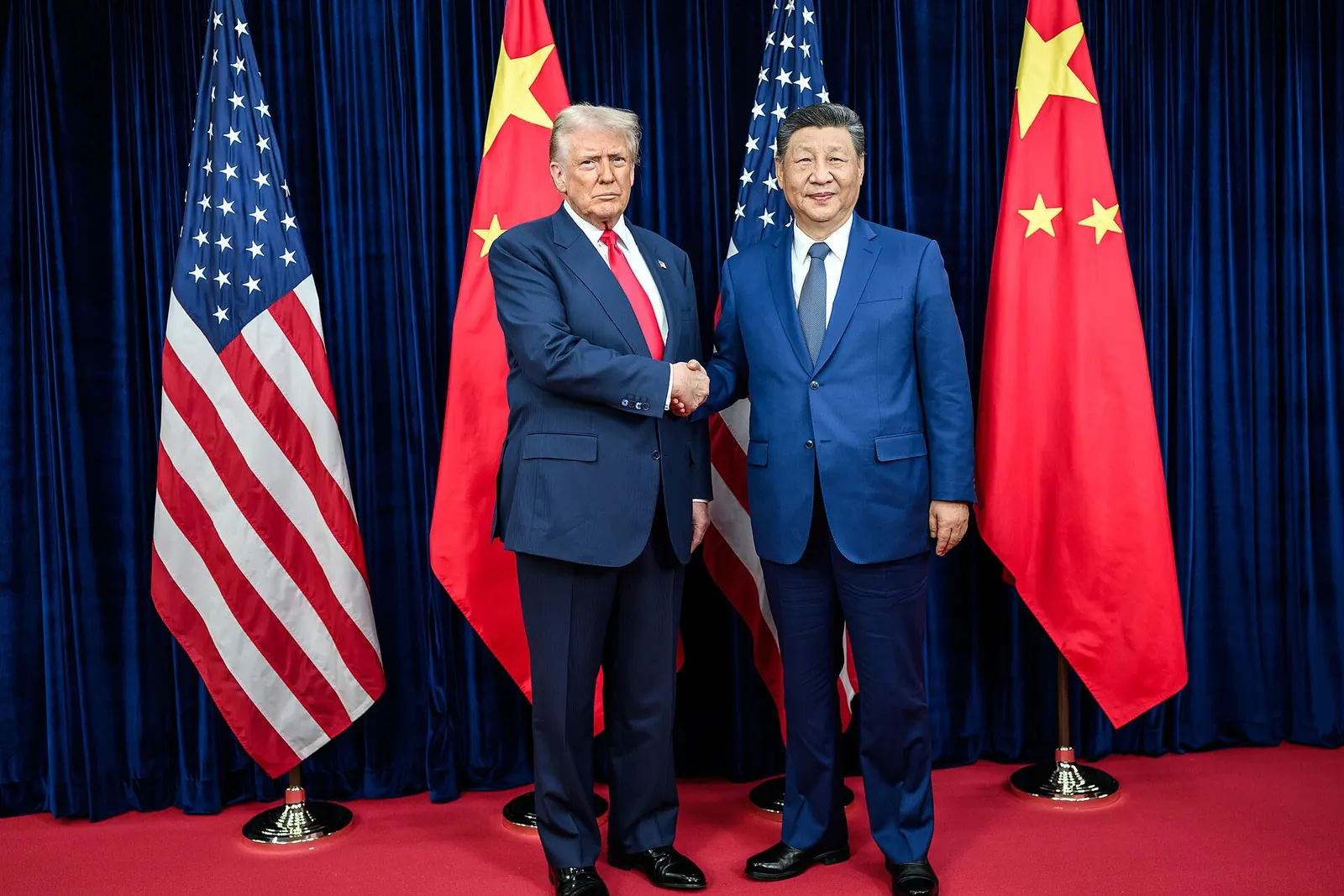
According to a Bloomberg report published in the Spokesman-Review, ahead of the Trump–Xi meeting expected in Washington on 24 September, the US and China are discussing reciprocal tariff cuts on about 30 billion dollars of trade; Treasury Secretary Bessent and Chinese Vice Premier He Lifeng are scheduled to meet in New York at the weekend. According to a 9 September analysis by Brownstein, a one-year extension of the Busan truce is the most likely outcome, and the total tariff burden on Chinese goods is expected to remain at around 20 per cent.
The truce and the suspension of rare earth export controls expire on 10 November 2026. Brownstein does not expect any easing of chip export controls and notes that a 14 billion dollar arms sale to Taiwan is on hold. The legal ground has also shifted: the Supreme Court struck down the IEEPA tariffs in February, and the Section 122 tariffs expired on 24 July.
Talay assessment
Bottom line
Pre-summit preparations indicate that a one-year extension of the Busan truce, which expires on 10 November, and limited reciprocal tariff cuts on about 30 billion dollars of trade are the most likely outcome. This reduces the risk of renewed trade-war escalation but does not resolve structural rivalry: chip export controls will stay and the Taiwan arms sale is pending. The changed legal ground, with IEEPA tariffs struck down and Section 122 expired, also narrows Washington's tariff leverage.
Likely effects
- Global trade and supplyPositive1–6 months
Extending the truce, with the total tariff burden on Chinese goods fixed at around 20%, gives firms a year of predictability. This is a positive backdrop for supply chain decisions and global trade volumes.
- Rare earth supplyPositive1–6 months
Extending the suspension of rare earth export controls secures critical input access for defence and electronics industries in the US, Europe and Asia. Without an extension, a supply shock risk emerges after 10 November.
- Technology rivalryNegative6 months+
No expected easing of chip export controls shows technological decoupling will deepen regardless of the trade truce. This entrenches fragmentation in semiconductor supply chains.
- Türkiye's foreign tradeUncertain1–6 months
Easing US–China tension is positive for global demand and freight, supporting external market conditions for Turkish exporters. On the other hand, Chinese goods with easier US market access could intensify competition with Turkish products in third markets in some sectors.
Possibilities, ranked
- 1Truce extended by one year65%
At the 24 September summit the Busan truce and rare earth suspension are extended by a year; limited tariff cuts on about 30 billion dollars of trade are announced and chip controls are unchanged.
Watch: The outcome of the Bessent–He Lifeng meeting and the joint statement or fact sheet issued at the summit.
- 2Brief technical extension or delay25%
The summit is postponed or yields no concrete package; the parties buy time with a technical extension of a few months before 10 November.
Watch: A change in the summit date, or no concrete figures on tariff cuts and extension length at the summit.
- 3Truce collapses10%
A crisis such as the Taiwan arms sale or chip controls derails talks; rare earth controls and reciprocal tariffs return on 10 November.
Watch: Approval of the 14 billion dollar arms sale to Taiwan and a Chinese announcement reinstating rare earth controls.
Probabilities are calibrated judgement based on the sources, not measurement, and are revised as new information arrives. Not investment advice.